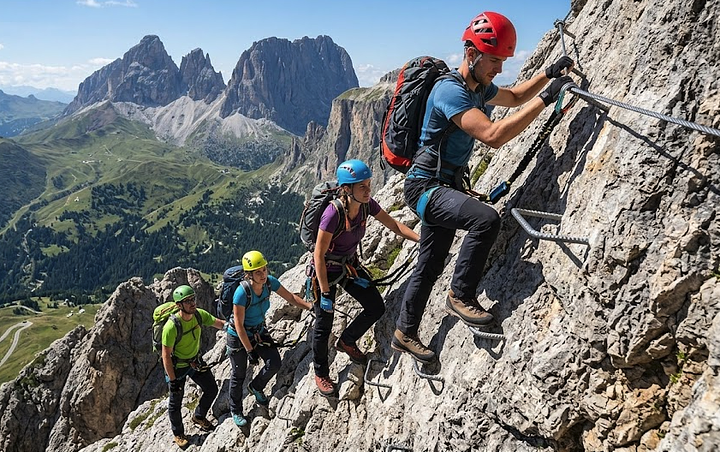
The best via ferratas in the Dolomites are waiting for you this summer! If you're seeking an adrenaline rush unlike any other, with incredible views suspended between earth and sky, or simply love heights and crave a unique challenge, then head to Italy's Dolomites. Grab your harness, helmet, and approach shoes to explore some of Europe's most spectacular protected climbing routes.
For those new to the concept, "via ferrata" is an Italian term meaning "iron path"—a protected climbing route made accessible through fixed cables, ladders, and anchors. These routes democratize vertical terrain, allowing adventurers of varying skill levels to experience the thrill of alpine climbing with enhanced safety. Whether seeking a guided via ferrata tour in the Dolomites or planning an independent adventure, these iron paths offer the perfect blend of challenge, safety, and spectacular mountain scenery.
What Are Via Ferratas? History and Heritage
Italy boasts more than 500 vie ferrate throughout the country, a wonderful heritage enabling mountain exploration for those without technical climbing skills. The first routes were established over a century ago in the Dolomites, but through subsequent decades they've spread throughout the Alps, creating a network of protected routes that open vertical terrain to broader audiences.
Via ferratas in the Dolomites were born largely from World War I infrastructure, retracing rocky paths used by Alpine troops to reach strategic outposts and mountaintops. Even today, many routes pass trenches, caves, and military installations from the Great War, adding historical depth to the physical adventure. These routes transformed from military necessity into recreational mountaineering, allowing modern travelers to access the impressive environment of the great Dolomite walls safely.
The evolution from wartime infrastructure to adventure tourism created a unique outdoor activity combining elements of hiking, climbing, and mountaineering without requiring years of technical training. This accessibility, combined with the Dolomites' UNESCO World Heritage status and dramatic limestone geology, has made via ferrata tours in the Dolomites increasingly popular among international adventure travelers.
Essential Gear List for Via Ferrata in the Dolomites
Proper equipment proves crucial for safe and enjoyable via ferrata experiences. Understanding essential gear list for via ferrata in the Dolomites helps ensure you're properly prepared for vertical adventures.
Required Safety Equipment
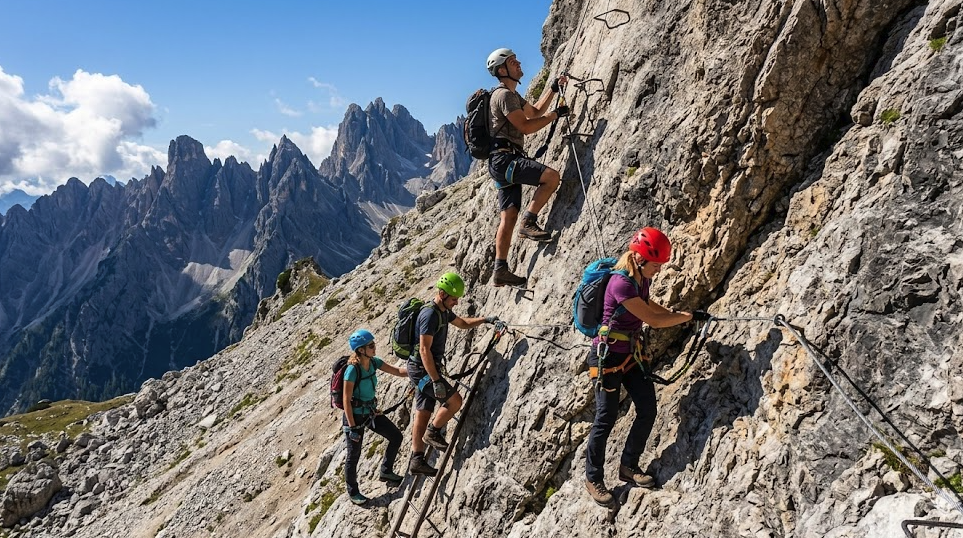
Via Ferrata Set: The specialized safety system connects you to the fixed steel cable, typically featuring two lanyards with carabiners and an energy-absorbing shock absorber. Top-rated via ferrata equipment brands for Dolomites climbs include Petzl, Black Diamond, Camp, and Singing Rock, all offering certified sets meeting European safety standards.
Helmet: Via ferrata helmets suitable for Dolomites terrain must protect against falling rocks and head impacts during falls. Climbing helmets from established brands provide appropriate protection while maintaining comfort during extended routes.
Harness: A comfortable climbing harness with adjustable leg loops and sufficient gear loops for equipment storage. Via ferrata harnesses suitable for Dolomites terrain should fit over hiking clothes and allow freedom of movement during vertical sections.
Gloves: Heavy-duty gloves protect hands from steel cable abrasion during extended climbing. Via ferrata-specific gloves balance protection with dexterity for handling carabiners and other equipment.
Additional Recommended Equipment
- Quality hiking boots with stiff soles for small footholds and ladder rungs
- Appropriate layered clothing for variable mountain weather
- Backpack (20-30L) for personal items and extra layers
- Water (minimum 2 liters) and high-energy snacks
- First aid kit with blister treatment and basic supplies
- Headlamp for routes requiring early starts or unexpected delays
- Sunscreen, sunglasses, and sun protection
- Map, compass, or GPS device for approach and descent navigation
Safety gear recommendations for via ferrata routes in the Dolomites emphasize certified equipment over budget alternatives. The forces generated during potential falls require properly rated gear that meets UIAA or CE safety standards.
Where to Rent Via Ferrata Gear Near the Dolomites
Where to rent via ferrata gear near the Dolomites represents a common question for international travelers unwilling to invest in equipment for occasional use or preferring to avoid traveling with specialized gear.
Options for renting via ferrata equipment near Dolomite climbing areas include:
Mountain Sports Shops: Towns like Cortina d'Ampezzo, Madonna di Campiglio, Val Gardena, and Arabba feature outdoor retailers offering via ferrata set rentals, typically including harness, helmet, and lanyards. Daily or multi-day rental rates make this cost-effective for short trips.
Mountain Guide Offices: Professional guide services often include equipment rental with guided tours, ensuring properly fitted, well-maintained gear without separate rental arrangements.
Mountain Hut Services: Some rifugios near popular routes offer basic equipment rental, though availability and quality vary. This option suits those who arrive without gear and decide to attempt routes spontaneously.
Where to purchase via ferrata kits suitable for the Dolomites? For frequent users, outdoor retailers in major Dolomites towns stock complete systems, or online retailers like Bergfreunde, Bergzeit, or international Amazon sites ship throughout Europe.
Rental costs typically range €15-25 per day for complete sets, with multi-day discounts available. Always inspect rented equipment carefully, checking for damage, wear, and proper function before committing to routes.
Best Time of Year for a Via Ferrata Trip in the Dolomites
Best time of year for a via ferrata trip in the Dolomites spans from late June through September, with distinct advantages and considerations for each period.
June-Early July: Early season brings fewer crowds, pleasant temperatures at altitude, and wildflowers blooming across alpine meadows. However, north-facing routes may retain snow or ice, and some higher routes might not be fully accessible. Weather remains less stable than peak season.
Mid-July through August: Peak season offers the most reliable weather, all routes accessible, and maximum daylight hours for extended adventures. Mountain huts operate on full schedules, guide services run most frequently, and companies offering guided via ferrata tours in the Dolomites schedule maximum departures. However, expect crowds at popular routes and higher accommodation costs.
September: Shoulder season provides excellent conditions with fewer crowds, stable weather, and spectacular autumn colors beginning at lower elevations. Temperatures cool, making strenuous climbing more comfortable, though days shorten and some services reduce operations after mid-month.
Weather Considerations: Mountain weather changes rapidly regardless of season. Morning starts typically offer the most stable conditions, with afternoon thunderstorms common during summer. Monitor forecasts carefully and maintain flexibility in route selection based on conditions.
The Best Via Ferratas in the Dolomites: Route Selection
The Dolomites offer vie ferrate ranging from beginner-friendly introductions to expert-level challenges requiring significant experience and fitness. Understanding difficulty ratings helps select appropriate routes for your abilities.
Expert Level Routes
1# Ferrata Olivieri to Punta Anna, Tofana di Mezzo
Difficulty: Expert
Duration: 6-7 hours round trip
Elevation Gain: Approximately 1,000 meters
Punta Anna represents the first buttress of Tofana di Mezzo's southeast ridge, and this spectacular via ferrata largely climbs its dramatic south edge. Recognized as one of the best-known and most beautiful routes in the Dolomites, it features absolute exposure on vertical and technical sections with breathtaking views across Cortina d'Ampezzo and surrounding peaks.
The route demands strong physical fitness, comfort with significant exposure, and confidence on vertical terrain. The descent proves equally captivating, unfolding along typical Dolomites ledges requiring careful navigation and sustained concentration.
2# Ferrata delle Aquile, Paganella
Difficulty: Expert
Duration: 4-5 hours
Access: Cima della Paganella ski lift
For experiencing the thrill of crossing the sky suspended in clouds, the Ferrata delle Aquile delivers unforgettable exposure and technical challenges. This fascinating route ranks among Trentino's most spectacular for experienced climbers, accessible via ski lift from Cima della Paganella but designed exclusively for experienced hikers with excellent physical fitness and comfort with extreme exposure.
Intermediate Level Routes
3# Ferrata delle Bocchette, Brenta Dolomites
Difficulty: Intermediate
Duration: Two-day traverse
Highlights: Rifugio Alimonta overnight, Grostè cable car access from Madonna di Campiglio
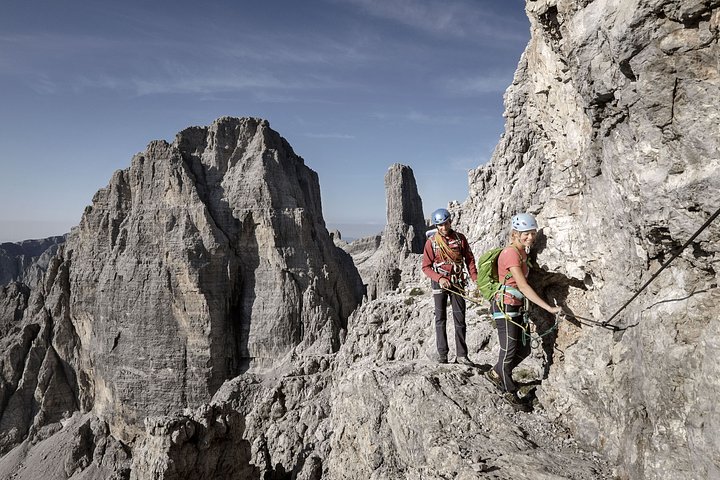
The Brenta's characteristic ledges running along mountain walls form part of the extensive Bocchette system of equipped trails. The Bocchette Centrali offers the most fascinating perspectives, requiring two days of walking with an overnight stop at Rifugio Alimonta—an authentic alpine refuge experience adding cultural dimension to the physical challenge.
This recommended multi-day via ferrata itinerary in the Dolomites combines sustained exposure with manageable technical difficulty, perfect for fit intermediate climbers seeking extended adventures. The refuge stay provides opportunities to experience traditional mountain hospitality while positioning you for the route's continuation.
4# Contraband Trail, near Arco (Lake Garda)
Difficulty: Intermediate
Duration: 3-4 hours
Historical Significance: Former smuggler route between Italy and Austria
This incredible climb around sheer cliffs with beautiful Lake Garda views follows a route historically used by smugglers crossing borders between Italy and Austria. The rugged cliff path offers breathtaking heights, historical intrigue, and natural beauty, requiring sure footing and comfort with exposure but remaining accessible to intermediate climbers.
Navigate under sheer rocks, through narrow paths, across ravines, and around mountainsides while Lake Garda shimmers hundreds of meters below—a spectacular combination of vertical challenge and scenic reward.
Beginner Level Routes
5# Fanes Falls (near Cortina d'Ampezzo)
Difficulty: Beginner
Duration: 2-3 hours
Highlights: 120-meter waterfall, forest approach
Explore magical vertical terrain while walking through forest, past streams, and beside the spectacular 120-meter Fanes Falls. This trail offers two route options, allowing customization to match desired experience levels or providing incentive to return for the alternative next time.
An ideal introduction for those seeking a taste of via ferrata with spectacular waterfall vantage points, this route combines accessible technical difficulty with rewarding scenery—perfect for families, first-timers, or those building confidence before attempting more challenging routes.
Guided Via Ferrata Tours in the Dolomites
Best guided via ferrata tours in the Dolomites provide crucial advantages over independent attempts, particularly for those new to the activity or unfamiliar with the region.
Advantages of Professional Guidance
Safety and Expertise: Certified mountain guides possess intimate knowledge of routes, weather patterns, and emergency procedures. How to find certified mountain guides for via ferrata in the Dolomites involves seeking UIAGM/IFMGA qualified professionals who meet international mountain guide standards.
Skill Development: Booking private via ferrata instruction in the Dolomites allows focused attention on technique, safety procedures, and efficient movement on vertical terrain. Guides provide real-time coaching that accelerates learning and builds confidence.
Route Selection: Professional guides match routes to group abilities and current conditions, ensuring appropriate challenges without overwhelming participants. Their local knowledge reveals spectacular routes that independent travelers often miss.
Logistical Support: Companies offering guided via ferrata tours in the Dolomites handle equipment provision, transportation logistics, and mountain hut bookings, eliminating planning complexity.
Popular Via Ferrata Tour Operators
Reviews of via ferrata guides operating in the Dolomites consistently highlight local guide services offering expertise, safety, and cultural insights that transform good adventures into extraordinary experiences.
Adventoured maintains a network of certified mountain guides specializing in via ferrata experiences throughout the Dolomites and surrounding regions. Our guided via ferrata tours combine safety, professional instruction, and insider access to the region's most spectacular routes.
Popular via ferrata companies offering multi-day climbs in the Dolomites typically provide:
Certified UIAGM/IFMGA mountain guides
All technical equipment (harness, helmet, via ferrata set)
Mountain hut accommodation arrangements
Transportation between routes and trailheads
Emergency support and insurance coordination
Cost comparison for guided via ferrata experiences in the Dolomites varies by group size, route difficulty, and services included. Single-day guided experiences typically range €150-300 per person for small groups, while recommended multi-day via ferrata itineraries in the Dolomites with full service cost €800-1,500 per person for 3-5 day programs.
Planning Your Via Ferrata Adventure
Training and Preparation
Where to find via ferrata training courses before Dolomites trips includes climbing gyms offering via ferrata-specific instruction, outdoor centers providing introduction courses, and local via ferrata climbing schools and instructors in the Dolomites offering skills development programs.
Physical preparation should emphasize:
Upper body and grip strength for sustained cable climbing
Core stability for maintaining body position on vertical terrain
Cardiovascular fitness for sustained effort at altitude
Leg strength for ladder climbing and small footholds
Accommodation and Logistics
Recommended lodging options near popular Dolomite via ferrata access points include Cortina d'Ampezzo for Tofana routes, Madonna di Campiglio for Brenta approaches, Val Gardena for central Dolomites access, and Arco for Lake Garda region routes.
How to book mountain huts along via ferrata routes in the Dolomites requires advance planning, particularly during peak season. Many multi-day routes incorporate rifugio stays, necessitating reservations months ahead for July-August dates.
Transportation services from major airports to Dolomite via ferrata regions include:
Venice Marco Polo Airport: Cortina Express buses, rental cars
Verona Airport: Rental cars, private transfers to Lake Garda and western Dolomites
Innsbruck Airport: Rental cars for northern Dolomites access
Bergamo Airport: Rental cars for western approaches
Technology and Navigation
Best apps for navigating via ferrata routes in the Dolomites include:
Outdooractive: Comprehensive route database with GPS navigation
Komoot: Route planning with offline maps
PeakVisor: Peak identification and terrain visualization
ViaFerrata App: Specialized database of European via ferrata routes
Physical maps remain essential backup despite digital tools—battery depletion or device failure in mountains leaves digital-only navigation vulnerable.
Safety Considerations and Best Practices
Via ferrata safety extends beyond proper equipment to include sound judgment, realistic self-assessment, and conservative decision-making:
Weather Awareness: Mountain storms create serious hazards on exposed via ferrata routes. Metal cables attract lightning, while rain makes holds slippery and increases fall risk. Retreat if weather deteriorates.
Physical Fitness: Routes requiring 4-6 hours of sustained climbing demand appropriate fitness. Exhaustion leads to poor decisions and increased accident risk.
Technical Ability: Difficulty ratings provide guidance, but individual comfort with exposure varies significantly. Choose routes matching your actual abilities rather than aspirational goals.
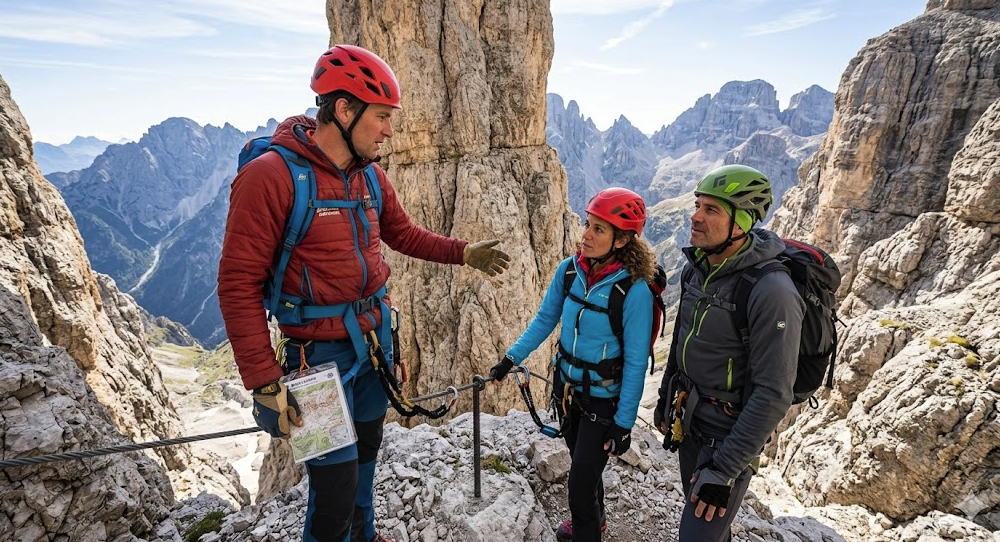
Group Management: Maintain appropriate spacing on routes, avoid crowding at technical sections, and communicate clearly about pace and challenges.
Your Via Ferrata Adventure Awaits
The best via ferratas in the Dolomites offer extraordinary opportunities to experience vertical terrain with enhanced safety, combining the thrill of climbing with accessibility for non-technical mountaineers. Whether seeking beginner-friendly introduction routes or expert-level challenges on exposed ridges, the Dolomites provide experiences that remain etched in memory.
How to book via ferrata climbing tours in the Dolomites online begins with connecting with experienced local operators who provide comprehensive support, professional guidance, and insider knowledge transforming good adventures into unforgettable experiences.
Adventoured offers guided via ferrata tours throughout the Dolomites, from single-day introductions to multi-day traverses incorporating mountain hut stays and multiple route experiences. Our certified UIAGM guides provide the expertise, equipment, and local knowledge that ensure safe, rewarding adventures on Italy's most spectacular iron paths.
Ready to experience the vertical world of the Dolomites?